
abatec · Professionelle Netzwerk- und Glasfasertechnik
Fibre Pigtails
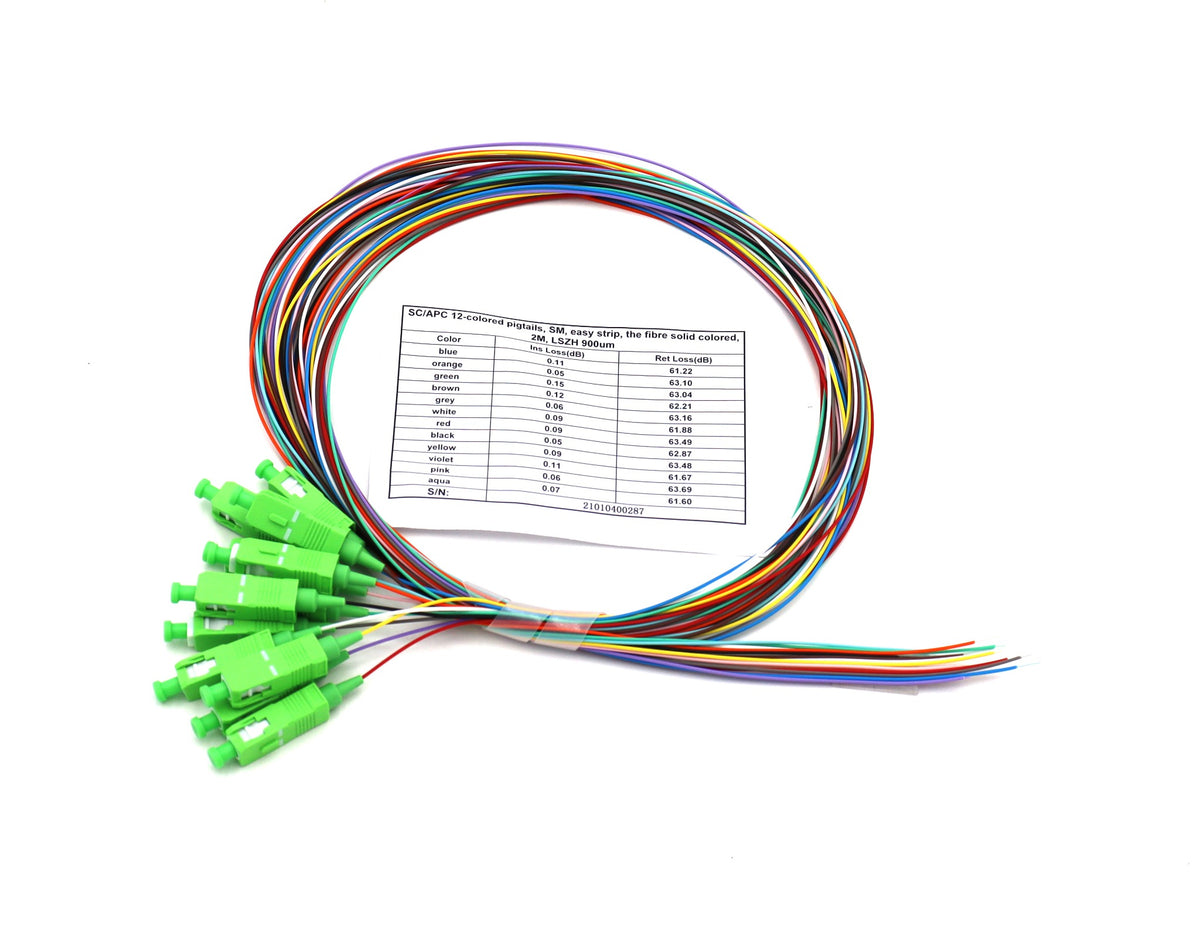
A fiber optic pigtail is assembled with a connector on one side; the free fiber end is spliced to the link in splice boxes, connection boxes, or distributors. Fiber type, connector, and polish are the most important factors for selection. Match these features with the existing fiber optic link and the couplers used.
Produkte im Überblick
Fiber connection for splicing technology
Fiber optic pigtails for splice boxes and fiber optic distribution
A fiber optic pigtail is assembled with a connector on one side; the free fiber end is spliced to the link in splice boxes, connection boxes, or distributors. Fiber type, connector, and polish are the most important factors for selection. Match these features with the existing fiber optic link and the couplers used.
Select pigtails Read selection guideClassifying fiber optic pigtails by fiber type
Select the fiber type that matches the rest of the transmission link. The cards serve as technical guidance and do not indicate the current availability of individual shop variants.
-
Singlemode · 9/125 µm
OS2
For links with compatible OS2 singlemode infrastructure. Pigtail, installation fiber, coupler, and active components must be consistently compatible.
-
Multimode · 50/125 µm
OM3
For existing or planned OM3 multimode links. Check the compatibility of all passive and active components before ordering.
-
Multimode · 50/125 µm
OM4
For compatible OM4 multimode infrastructures. Do not use the designation and color as the sole selection criterion, but compare the technical data.
Show selection aid, additions, and frequently asked questions
Selecting fiber optic pigtails in a compact way
| Criterion | Possible selection | Check before ordering |
|---|---|---|
| Fiber type | OS2, OM3, or OM4 | Must match the rest of the fiber optic link. |
| Connector | e.g., LC, SC, or E-2000 | Check the connection and coupler of the splice box. |
| Polish | UPC or APC | Do not connect UPC and APC directly to each other. |
| Fiber construction | e.g., 900 µm | Check suitability for splice tray and installation. |
| Length | depending on the version | Plan for sufficient routing without unnecessary fiber reserve. |
| Quantity/Color sorting | Single pigtail or set | Consider the project's pin assignment and color sequence. |
Pigtail or patch cable?
Fiber optic pigtail
Assembled with a connector on one side. The free end is typically spliced to an installation fiber in a splice box, connection box, or distributor.
Fiber optic patch cable
Equipped with connectors on both ends and intended for pluggable connections. You can find suitable standard versions in the fiber optic patch cables category.
Suitable additions for splicing technology and distribution
Always check pigtails together with the components to which they are connected, in which they are stored, or with which they are processed.
- Fiber optic splice boxes and assemblies
- Fiber optic couplers and adapters
- Splice protection
- Fiber optic tools
Customer-specific pigtail assembly
If you require a version that deviates from the standard range, connectors, fiber type, length, color sorting, configuration, and quantity can be requested on a project-specific basis. Describe the technical parameters as completely as possible; feasibility will be checked as part of the inquiry.
Request customer-specific fiber optic pigtails from abatec
Frequently asked questions about fiber optic pigtails
What is a fiber optic pigtail?
A fiber optic pigtail is an optical fiber that is assembled with a connector at one end. The other, free end is usually spliced to a fiber of the installation link.
Where are pigtails used?
Pigtails are typically used in splice boxes, connection boxes, and fiber optic distributors. There, they create the transition from the spliced installation fiber to the pluggable interface.
What is the difference between a pigtail and a patch cable?
A pigtail has a connector on only one end; the other end is spliced. A patch cable is equipped with connectors on both ends.
Which pigtails match OS2, OM3, or OM4?
OS2 pigtails belong to matching singlemode links with 9/125 µm. OM3 and OM4 pigtails belong to the respective multimode links with 50/125 µm. The entire link, including couplers and active components, must technically match.
What is the difference between UPC and APC?
UPC and APC denote different geometries of the connector end face. They are not intended for direct connection with each other. Therefore, check the polish and mating interface consistently.
Which connectors are used for pigtails?
Depending on the application, LC, SC, or E-2000, for example, are suitable. The decisive factor is the existing connection or coupler in the splice box or distributor. The detailed pigtail guide explains the selection criteria.
What information is required for selection or an individual inquiry?
Fiber type, connector, polish, fiber construction, length, quantity, and desired color sorting or configuration are helpful. Supplement this with information on the splice box, coupler, and existing link.




Fiber connection for splicing technology
Fiber optic pigtails for splice boxes and fiber optic distribution
A fiber optic pigtail is assembled with a connector on one side; the free fiber end is spliced to the link in splice boxes, connection boxes, or distributors. Fiber type, connector, and polish are the most important factors for selection. Match these features with the existing fiber optic link and the couplers used.
Select pigtails Read selection guideClassifying fiber optic pigtails by fiber type
Select the fiber type that matches the rest of the transmission link. The cards serve as technical guidance and do not indicate the current availability of individual shop variants.
-
Singlemode · 9/125 µm
OS2
For links with compatible OS2 singlemode infrastructure. Pigtail, installation fiber, coupler, and active components must be consistently compatible.
-
Multimode · 50/125 µm
OM3
For existing or planned OM3 multimode links. Check the compatibility of all passive and active components before ordering.
-
Multimode · 50/125 µm
OM4
For compatible OM4 multimode infrastructures. Do not use the designation and color as the sole selection criterion, but compare the technical data.
Show selection aid, additions, and frequently asked questions
Selecting fiber optic pigtails in a compact way
| Criterion | Possible selection | Check before ordering |
|---|---|---|
| Fiber type | OS2, OM3, or OM4 | Must match the rest of the fiber optic link. |
| Connector | e.g., LC, SC, or E-2000 | Check the connection and coupler of the splice box. |
| Polish | UPC or APC | Do not connect UPC and APC directly to each other. |
| Fiber construction | e.g., 900 µm | Check suitability for splice tray and installation. |
| Length | depending on the version | Plan for sufficient routing without unnecessary fiber reserve. |
| Quantity/Color sorting | Single pigtail or set | Consider the project's pin assignment and color sequence. |
Pigtail or patch cable?
Fiber optic pigtail
Assembled with a connector on one side. The free end is typically spliced to an installation fiber in a splice box, connection box, or distributor.
Fiber optic patch cable
Equipped with connectors on both ends and intended for pluggable connections. You can find suitable standard versions in the fiber optic patch cables category.
Suitable additions for splicing technology and distribution
Always check pigtails together with the components to which they are connected, in which they are stored, or with which they are processed.
- Fiber optic splice boxes and assemblies
- Fiber optic couplers and adapters
- Splice protection
- Fiber optic tools
Customer-specific pigtail assembly
If you require a version that deviates from the standard range, connectors, fiber type, length, color sorting, configuration, and quantity can be requested on a project-specific basis. Describe the technical parameters as completely as possible; feasibility will be checked as part of the inquiry.
Request customer-specific fiber optic pigtails from abatec
Frequently asked questions about fiber optic pigtails
What is a fiber optic pigtail?
A fiber optic pigtail is an optical fiber that is assembled with a connector at one end. The other, free end is usually spliced to a fiber of the installation link.
Where are pigtails used?
Pigtails are typically used in splice boxes, connection boxes, and fiber optic distributors. There, they create the transition from the spliced installation fiber to the pluggable interface.
What is the difference between a pigtail and a patch cable?
A pigtail has a connector on only one end; the other end is spliced. A patch cable is equipped with connectors on both ends.
Which pigtails match OS2, OM3, or OM4?
OS2 pigtails belong to matching singlemode links with 9/125 µm. OM3 and OM4 pigtails belong to the respective multimode links with 50/125 µm. The entire link, including couplers and active components, must technically match.
What is the difference between UPC and APC?
UPC and APC denote different geometries of the connector end face. They are not intended for direct connection with each other. Therefore, check the polish and mating interface consistently.
Which connectors are used for pigtails?
Depending on the application, LC, SC, or E-2000, for example, are suitable. The decisive factor is the existing connection or coupler in the splice box or distributor. The detailed pigtail guide explains the selection criteria.
What information is required for selection or an individual inquiry?
Fiber type, connector, polish, fiber construction, length, quantity, and desired color sorting or configuration are helpful. Supplement this with information on the splice box, coupler, and existing link.